Suspension Polyvinyl Chloride: Versatile, Sustainable Industrial Polymer Solution

All Categories

suspension polyvinyl chloride

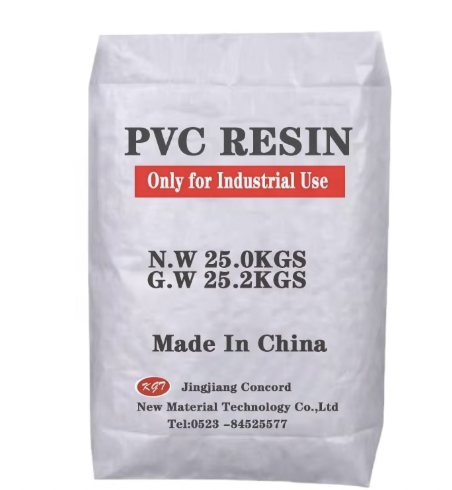
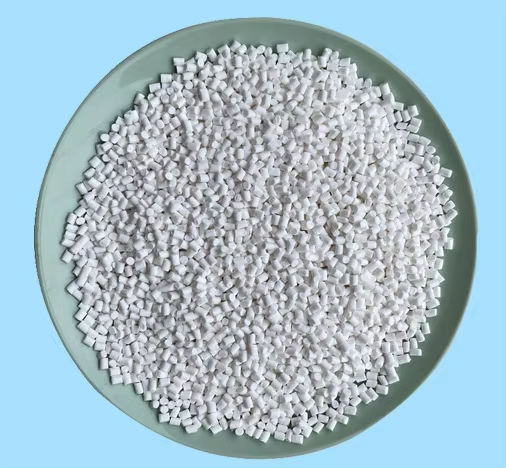
Suspension polyvinyl chloride (S-PVC) represents a crucial variant of PVC produced through suspension polymerization, where vinyl chloride monomer is dispersed in water and polymerized using free-radical initiators. This process creates PVC particles ranging from 100-180 micrometers in diameter, ideal for various industrial applications. The suspension method accounts for approximately 80% of global PVC production, making it the most widely used manufacturing technique. During production, stabilizers, lubricants, and other additives are incorporated to enhance the material's properties and processing characteristics. S-PVC exhibits excellent mechanical properties, including high tensile strength and impact resistance, while maintaining good chemical resistance and weatherability. The material's versatility allows for extensive modification through various additives, enabling manufacturers to tailor its properties for specific applications. Common applications include rigid PVC products such as pipes, fittings, windows, doors, and packaging materials. The material's processing flexibility enables both injection molding and extrusion manufacturing methods, while its thermal stability ensures consistent performance across different temperature ranges.


New Product Releases

Suspension polyvinyl chloride offers numerous advantages that make it the preferred choice for many industrial applications. First, its production process allows for excellent control over particle size distribution, resulting in superior processing characteristics and end-product quality. The material demonstrates exceptional dimensional stability, maintaining its shape and properties even under varying environmental conditions. Cost-effectiveness is a significant advantage, as the suspension polymerization process requires minimal energy input and offers high yield rates. The material's versatility in accepting various additives enables manufacturers to create custom formulations tailored to specific applications, from rigid construction materials to flexible medical devices. S-PVC's excellent chemical resistance makes it ideal for applications involving exposure to acids, bases, and other aggressive substances. The material's inherent fire-retardant properties contribute to safety in construction and electrical applications. From an environmental perspective, S-PVC products are recyclable and can be reprocessed multiple times without significant property degradation. The material's long service life and low maintenance requirements make it cost-effective over its lifecycle. Additionally, modern S-PVC formulations comply with strict environmental and safety regulations, making them suitable for sensitive applications like medical devices and food packaging. The material's processing flexibility allows for various manufacturing methods, reducing production costs and enabling diverse product designs.

Tips And Tricks

What Is PVC Resin and How Is It Manufactured?

27

Aug

What Is PVC Resin and How Is It Manufactured?

Understanding the Fundamentals of Polyvinyl Chloride Production PVC resin stands as one of the most versatile and widely used synthetic materials in modern manufacturing. As a fundamental building block of countless products, from construction materi...
View More
Can Toughening Agents Improve Low-Temperature Performance?

27

Aug

Can Toughening Agents Improve Low-Temperature Performance?

The Science Behind Material Enhancement Through Toughening Agents The quest for superior material performance at low temperatures has led scientists and engineers to explore innovative solutions, with toughening agents emerging as a revolutionary app...
View More
Can Lubricants Improve Demolding in Plastic Injection Molding

22

Oct

Can Lubricants Improve Demolding in Plastic Injection Molding

Enhancing Plastic Production Through Advanced Demolding Solutions The plastic injection molding industry continuously seeks ways to optimize production efficiency and product quality. Among the most crucial aspects of this process is the demolding ph...
View More
What Is the Impact of Plasticizer on PVC Gelation

22

Oct

What Is the Impact of Plasticizer on PVC Gelation

Understanding the Fundamental Role of Plasticizers in PVC Processing The process of PVC gelation represents a crucial aspect of polymer processing that fundamentally transforms polyvinyl chloride from its raw state into useful products. At the heart ...
View More

Get a Free Quote

Our representative will contact you soon.
Email
Name
Company Name
Message
0/1000

suspension polyvinyl chloride

Superior Processing Characteristics

Superior Processing Characteristics

Suspension polyvinyl chloride's exceptional processing characteristics stem from its well-controlled particle morphology and size distribution. The suspension polymerization process creates uniform particles with optimal porosity, facilitating the incorporation of additives and ensuring consistent processing behavior. This uniformity results in better fusion during processing, leading to improved product quality and reduced manufacturing defects. The material's excellent flow properties enable efficient processing through various manufacturing methods, including injection molding, extrusion, and calendering. The controlled particle size distribution also contributes to better powder flow characteristics, ensuring smooth and consistent feed rates in processing equipment. These properties collectively reduce production costs and improve manufacturing efficiency while maintaining high product quality standards.
Exceptional Versatility and Customization

Exceptional Versatility and Customization

The remarkable versatility of suspension polyvinyl chloride lies in its ability to accept various additives and modifications, enabling manufacturers to create customized formulations for specific applications. The material's inherent compatibility with a wide range of plasticizers, stabilizers, and other additives allows for precise control over properties such as flexibility, impact resistance, and weatherability. This adaptability makes S-PVC suitable for applications ranging from rigid construction materials to flexible medical devices. The material's ability to be modified extends to its appearance, with options for various colors, textures, and surface finishes. This versatility reduces the need for multiple material types in manufacturing operations, simplifying inventory management and reducing costs.
Environmental Sustainability and Longevity

Environmental Sustainability and Longevity

Suspension polyvinyl chloride demonstrates strong environmental credentials through its recyclability and long service life. The material can be effectively recycled multiple times without significant degradation of its properties, contributing to circular economy initiatives. Its durability and resistance to environmental factors result in products that maintain their performance characteristics over extended periods, reducing replacement frequency and associated environmental impact. The energy-efficient production process of S-PVC contributes to its lower carbon footprint compared to alternative materials. Modern S-PVC formulations are designed to meet strict environmental regulations, eliminating harmful additives while maintaining performance. The material's lightweight nature reduces transportation-related emissions, while its excellent insulation properties contribute to energy efficiency in building applications.

Get a Free Quote

Our representative will contact you soon.
Email
Name
Company Name
Message
0/1000