
 EN
EN
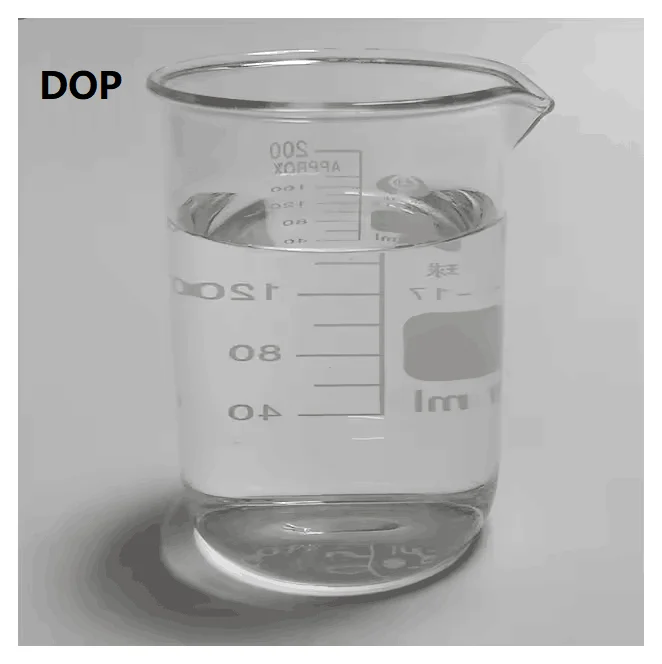
The chemical industry has long relied on effective additives to transform rigid materials into flexible, workable solutions. Among these crucial additives, DOP plasticizer stands as one of the most widely used compounds for enhancing the flexibility and processability of polyvinyl chloride and other thermoplastic materials. This colorless, odorless liquid has revolutionized manufacturing processes across industries from construction to automotive, enabling the production of everything from flexible vinyl flooring to medical tubing.
Understanding the molecular mechanisms behind DOP plasticizer functionality reveals why this particular phthalate ester has become indispensable in modern polymer processing. The compound works by inserting itself between polymer chains, effectively reducing intermolecular forces and allowing greater molecular mobility. This fundamental change in polymer structure translates directly into enhanced flexibility, improved processability, and expanded application possibilities for manufacturers worldwide.
Understanding DOP Plasticizer Chemical Structure and Properties
Molecular Composition and Basic Chemistry
DOP plasticizer, chemically known as dioctyl phthalate or bis(2-ethylhexyl) phthalate, features a distinctive molecular structure that makes it exceptionally effective for polymer modification. The compound consists of a benzene ring with two ester groups attached, each connected to an eight-carbon alkyl chain. This specific arrangement provides the perfect balance between compatibility with polymer matrices and migration resistance, ensuring long-term performance in finished products.
The physical properties of DOP plasticizer contribute significantly to its widespread adoption across industries. With a molecular weight of approximately 391 grams per mole and a viscosity ranging from 80 to 85 centipoise at room temperature, this liquid additive integrates seamlessly into polymer processing operations. The compound maintains stability across a broad temperature range, making it suitable for applications requiring thermal cycling or extended exposure to elevated temperatures.
Compatibility Characteristics with Various Polymers
The compatibility of DOP plasticizer with different polymer systems determines its effectiveness and durability in specific applications. PVC demonstrates exceptional compatibility with this additive, allowing for high loading levels without significant plasticizer migration or bloom. The strong interaction between DOP plasticizer molecules and PVC chains creates a stable, flexible matrix that maintains its properties over extended periods.
Beyond PVC applications, DOP plasticizer shows varying degrees of compatibility with other thermoplastic materials. Polystyrene, polyethylene, and certain rubber compounds can benefit from DOP plasticizer addition, though optimal loading levels differ significantly from those used in PVC formulations. Understanding these compatibility relationships enables formulators to maximize performance while minimizing potential issues such as plasticizer bleeding or reduced mechanical properties.
Mechanisms of Flexibility Enhancement in Polymer Matrices
Intermolecular Force Reduction
The primary mechanism through which DOP plasticizer enhances flexibility involves the systematic reduction of intermolecular forces between polymer chains. In unplasticized PVC, strong dipole-dipole interactions and van der Waals forces create rigid, brittle materials unsuitable for many commercial applications. When DOP plasticizer molecules position themselves between polymer chains, they effectively shield these attractive forces, allowing individual chains greater freedom of movement.
This molecular-level intervention translates into measurable changes in bulk material properties. The glass transition temperature decreases significantly with increasing DOP plasticizer concentration, shifting the material from a glassy, brittle state to a rubbery, flexible condition at room temperature. This transformation enables manufacturers to produce materials with precisely controlled flexibility levels by adjusting DOP plasticizer loading ratios.
Molecular Mobility and Chain Dynamics
Enhanced molecular mobility represents another crucial aspect of DOP plasticizer functionality in polymer systems. The presence of plasticizer molecules creates free volume within the polymer matrix, providing space for chain segments to move more freely. This increased mobility manifests as improved elongation at break, reduced modulus values, and enhanced impact resistance in finished products.
The dynamic nature of DOP plasticizer interaction with polymer chains ensures continued effectiveness throughout the material's service life. Unlike some additives that may degrade or migrate over time, properly formulated DOP plasticizer systems maintain their flexibility-enhancing properties for years of normal use. This longevity makes the compound particularly valuable for applications requiring long-term performance reliability.
Applications Across Different Industries
Construction and Building Materials
The construction industry represents one of the largest consumers of DOP plasticizer worldwide, utilizing the compound in numerous applications requiring flexible, durable materials. Vinyl flooring products depend heavily on DOP plasticizer to achieve the proper balance of flexibility and wear resistance needed for residential and commercial installations. The additive enables manufacturers to produce flooring materials that resist cracking under foot traffic while maintaining dimensional stability across varying environmental conditions.
Window profiles, siding materials, and roofing membranes also benefit significantly from DOP plasticizer incorporation. These applications require materials that can withstand thermal expansion and contraction cycles while maintaining weatherability and structural integrity. The compound's ability to reduce brittleness at low temperatures while preserving heat resistance at elevated temperatures makes it ideal for these demanding outdoor applications.
Automotive and Transportation
Automotive manufacturers increasingly rely on DOP plasticizer for interior components, wire harnesses, and sealing applications. Dashboard components, seat covers, and door panels require materials that remain flexible across extreme temperature ranges while resisting UV degradation and maintaining attractive appearance characteristics. DOP plasticizer formulations enable the production of automotive components that meet stringent performance requirements while providing cost-effective solutions.
Wire and cable applications represent another significant automotive use for DOP plasticizer technology. The compound enhances the flexibility of cable jacketing materials, allowing for easier installation in confined spaces while providing excellent electrical insulation properties. The low-temperature flexibility imparted by DOP plasticizer ensures reliable performance in cold climate conditions where unplasticized materials might become brittle and crack.
Processing Advantages and Manufacturing Benefits
Improved Melt Flow and Processing Characteristics
DOP plasticizer significantly improves the processing characteristics of PVC and other thermoplastics during manufacturing operations. The compound reduces melt viscosity at processing temperatures, enabling easier flow through extrusion dies, injection molding tools, and calendering equipment. This improved flow behavior translates directly into reduced processing pressures, lower energy consumption, and enhanced productivity in manufacturing facilities.
The lubricity provided by DOP plasticizer also contributes to improved surface finish and dimensional accuracy in molded and extruded products. Parts produced with optimized plasticizer levels exhibit smoother surfaces, better detail reproduction, and reduced internal stresses compared to materials processed without adequate plasticization. These benefits enable manufacturers to produce higher-quality products while reducing scrap rates and post-processing requirements.
Temperature Processing Windows
One of the most significant advantages of DOP plasticizer lies in its ability to expand the useful processing temperature window for polymer materials. The compound reduces the minimum processing temperature required for achieving adequate flow while simultaneously improving thermal stability at elevated temperatures. This expanded processing window provides manufacturers with greater flexibility in equipment selection and operating parameters.
The thermal stability of DOP plasticizer itself contributes to consistent processing performance across extended production runs. Unlike some alternative plasticizers that may decompose or volatilize at processing temperatures, DOP plasticizer maintains its integrity throughout normal processing cycles. This stability ensures consistent product quality and reduces the need for frequent parameter adjustments during manufacturing operations.
Performance Optimization and Formulation Considerations
Loading Level Determination
Determining optimal DOP plasticizer loading levels requires careful consideration of end-use requirements, processing constraints, and economic factors. Typical loading levels range from 20 to 80 parts per hundred parts of resin, depending on the desired flexibility level and application requirements. Lower loading levels provide moderate flexibility improvements while maintaining higher modulus values, suitable for semi-rigid applications.
Higher DOP plasticizer concentrations enable the production of highly flexible materials suitable for applications requiring significant deformation capability. However, excessive loading levels can lead to reduced tensile strength, increased plasticizer migration, and potential compatibility issues. Achieving the optimal balance requires systematic evaluation of mechanical properties, processing characteristics, and long-term performance requirements.
Synergistic Effects with Other Additives
DOP plasticizer often works synergistically with other additives to achieve specific performance objectives in polymer formulations. Heat stabilizers, UV absorbers, and antioxidants can be combined with DOP plasticizer to create comprehensive additive packages that address multiple performance requirements simultaneously. These synergistic relationships enable formulators to develop materials with enhanced durability and expanded application capabilities.
Impact modifier combinations with DOP plasticizer can provide particularly beneficial effects for applications requiring both flexibility and impact resistance. The combination of these additive types creates materials with superior toughness characteristics compared to formulations using either additive type alone. Understanding these synergistic relationships enables formulators to develop more effective and economical formulations.
Quality Control and Testing Methods
Analytical Techniques for Plasticizer Content
Accurate determination of DOP plasticizer content in finished products requires sophisticated analytical techniques capable of distinguishing the compound from other formulation components. Gas chromatography-mass spectrometry represents the gold standard for plasticizer identification and quantification, providing both qualitative confirmation of plasticizer type and precise concentration measurements.
Infrared spectroscopy offers an alternative analytical approach suitable for routine quality control applications. The technique can rapidly identify DOP plasticizer presence and provide semi-quantitative concentration estimates without extensive sample preparation requirements. However, complex formulations containing multiple plasticizer types may require more sophisticated separation techniques for accurate analysis.
Performance Testing Protocols
Comprehensive performance evaluation of DOP plasticizer-containing materials requires standardized testing protocols that assess both short-term and long-term behavior characteristics. Tensile testing, flexural measurements, and impact resistance evaluations provide fundamental mechanical property data necessary for material qualification and application suitability assessment.
Long-term performance testing becomes particularly important for applications involving elevated temperatures, UV exposure, or chemical contact. Accelerated aging protocols can simulate years of service life in compressed timeframes, enabling prediction of material behavior under actual use conditions. These testing programs ensure that DOP plasticizer formulations will maintain their performance characteristics throughout their intended service life.
Environmental Considerations and Regulatory Compliance
Migration and Leaching Behavior
Understanding DOP plasticizer migration behavior becomes crucial for applications involving food contact, medical devices, or sensitive environmental conditions. The compound exhibits relatively low migration rates compared to some alternative plasticizers, making it suitable for applications where plasticizer retention is important. However, extended contact with aggressive solvents or elevated temperatures can increase migration rates beyond acceptable limits.
Testing protocols for migration assessment vary depending on intended application requirements and regulatory jurisdictions. Food contact applications require compliance with specific migration limits established by regulatory agencies, while medical device applications may have additional biocompatibility requirements. Understanding these requirements early in the development process ensures successful product commercialization.
Disposal and Recycling Considerations
The end-of-life management of DOP plasticizer-containing materials requires consideration of both environmental impact and economic factors. Many recycling processes can successfully handle plasticized materials, though plasticizer levels may need adjustment in recycled formulations to maintain target property levels. The thermal stability of DOP plasticizer generally allows successful processing through multiple recycling cycles without significant degradation.
Incineration represents an acceptable disposal method for DOP plasticizer-containing materials, as the compound undergoes complete combustion under proper conditions. Energy recovery systems can capture the heating value of the plasticizer during incineration, contributing to overall waste management efficiency. However, proper emission controls must be maintained to prevent release of any partial combustion products.
Future Developments and Industry Trends
Alternative Plasticizer Technologies
Research and development efforts continue to explore alternative plasticizer technologies that may complement or potentially replace DOP plasticizer in specific applications. Bio-based plasticizers derived from renewable feedstocks represent one promising development area, offering potential advantages in terms of sustainability and carbon footprint reduction. However, these alternatives must demonstrate equivalent or superior performance characteristics to gain widespread market acceptance.
Reactive plasticizers that become chemically bound to the polymer matrix during processing represent another innovative approach to flexibility enhancement. These compounds offer potential advantages in terms of migration resistance and long-term stability, though they may require modifications to existing processing equipment and procedures. The development of these advanced plasticizer systems continues to evolve as manufacturers seek improved performance and environmental characteristics.
Market Evolution and Regulatory Changes
The DOP plasticizer market continues to evolve in response to changing regulatory requirements, environmental concerns, and technological advances. Manufacturers must stay informed about regulatory developments that may affect plasticizer selection and formulation strategies. These changes can significantly impact material specifications and processing requirements across various industries.
Global harmonization of plasticizer regulations may simplify compliance requirements for manufacturers serving international markets. However, regional differences in regulatory approaches continue to require careful attention to local requirements and restrictions. Understanding these regulatory landscapes becomes essential for successful product development and commercialization strategies.
FAQ
What is the typical loading level of DOP plasticizer in PVC formulations?
Typical DOP plasticizer loading levels in PVC formulations range from 20 to 80 parts per hundred parts of resin, depending on the desired flexibility and application requirements. Rigid applications may use 20-40 parts, while highly flexible applications can utilize 60-80 parts. The optimal loading level depends on balancing flexibility requirements with mechanical strength needs and processing considerations.
How does temperature affect DOP plasticizer performance in polymer applications?
Temperature significantly influences DOP plasticizer performance by affecting both plasticizer efficiency and potential migration rates. At low temperatures, the plasticizer maintains material flexibility and prevents brittleness. At elevated temperatures, processing becomes easier due to reduced melt viscosity, but extended exposure to high temperatures may increase plasticizer migration and potential volatilization.
Can DOP plasticizer be used in food contact applications?
DOP plasticizer use in food contact applications is subject to specific regulatory restrictions and migration limits in many jurisdictions. While the compound has been widely used historically, some regulatory agencies have established strict migration limits or restricted its use in certain food contact applications. Alternative plasticizers specifically approved for food contact may be more appropriate for these applications.
What factors influence DOP plasticizer migration from finished products?
Several factors influence DOP plasticizer migration including temperature, contact medium compatibility, mechanical stress, and time. Higher temperatures increase molecular mobility and migration rates. Contact with oils, fats, or organic solvents can extract plasticizer more readily than contact with water. Mechanical flexing or stress can also accelerate migration by creating pathways for plasticizer movement within the material matrix.
Table of Contents
- Understanding DOP Plasticizer Chemical Structure and Properties
- Mechanisms of Flexibility Enhancement in Polymer Matrices
- Applications Across Different Industries
- Processing Advantages and Manufacturing Benefits
- Performance Optimization and Formulation Considerations
- Quality Control and Testing Methods
- Environmental Considerations and Regulatory Compliance
- Future Developments and Industry Trends
- FAQ