
 EN
EN
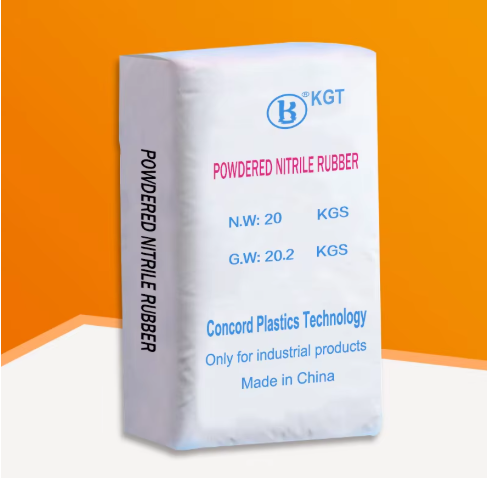
The precision of toughening agent dosage in polymer compounding represents a critical balance between achieving desired mechanical properties and maintaining cost-effectiveness. Industrial manufacturers face mounting pressure to optimize formulations that deliver enhanced impact resistance while preserving other essential characteristics such as tensile strength and processability. Understanding the complex relationship between toughening agent concentration and final product performance requires careful consideration of multiple variables including base polymer type, processing conditions, and intended application requirements.
Fundamental Principles of Toughening Agent Selection
Chemical Compatibility Assessment
The foundation of effective toughening agent dosage optimization begins with thorough chemical compatibility evaluation between the modifier and base polymer matrix. Compatibility determines not only the achievable dispersion quality but also influences the minimum effective concentration required to achieve measurable improvements in impact properties. Thermodynamic miscibility parameters play a crucial role in predicting whether phase separation will occur at specific concentration levels.
Modern analytical techniques including differential scanning calorimetry and dynamic mechanical analysis provide quantitative insights into polymer-modifier interactions. These methods reveal critical concentration thresholds where phase behavior transitions occur, directly informing optimal dosage ranges. Understanding these fundamental interactions prevents overformulation and ensures consistent performance across production batches.
Mechanical Property Trade-offs
Increasing toughening agent concentrations typically enhances impact resistance but may compromise other mechanical properties such as stiffness and yield strength. This inverse relationship necessitates careful balance optimization based on specific application requirements and performance priorities. Comprehensive mechanical testing protocols must evaluate multiple property dimensions simultaneously to identify optimal concentration windows.
The effectiveness of toughening agent dosage varies significantly with testing temperature and strain rate conditions. Dynamic impact testing reveals performance characteristics under actual service conditions, providing more relevant data than quasi-static measurements alone. Temperature-dependent behavior patterns help establish concentration guidelines for applications experiencing varied thermal environments.
Processing Considerations and Optimization Strategies
Mixing and Dispersion Requirements
Achieving uniform toughening agent distribution throughout the polymer matrix demands sophisticated mixing protocols tailored to specific viscosity ratios and processing equipment capabilities. Higher concentrations increase mixing complexity due to potential viscosity mismatches and extended residence time requirements. Processing temperature profiles must accommodate both base polymer flow characteristics and modifier thermal stability limitations.
Compounding sequence optimization influences final dispersion quality and determines whether target properties can be achieved at lower concentrations. Sequential addition protocols often prove more effective than single-step incorporation, particularly when dealing with high-viscosity modifiers or concentration-sensitive systems. Real-time rheological monitoring during compounding provides immediate feedback on dispersion progress and mixing efficiency.
Thermal Processing Stability
Extended thermal exposure during processing can degrade toughening agents, reducing their effectiveness and potentially requiring higher initial concentrations to compensate for losses. Thermal stability assessment under realistic processing conditions helps establish maximum safe residence times and temperature limits. Some modifiers exhibit concentration-dependent degradation kinetics, making dosage optimization more complex.
Antioxidant systems specifically designed for toughening agent protection can extend processing windows and improve concentration efficiency. Synergistic stabilizer combinations often provide better protection than individual components, allowing reduced toughening agent loading while maintaining equivalent performance levels. Processing aid selection must consider potential interactions with both base polymer and modifier systems.
Advanced Characterization Methods for Dosage Determination
Morphological Analysis Techniques
Electron microscopy reveals critical morphological features that directly correlate with toughening effectiveness and optimal concentration ranges. Phase size distribution analysis identifies concentration-dependent morphological transitions that influence mechanical performance. Quantitative image analysis provides statistical measures of phase dimensions and distribution uniformity across different dosage levels.
X-ray scattering techniques offer complementary insights into nanoscale organization and interfacial characteristics not visible through conventional microscopy. These methods detect subtle structural changes occurring at different toughening agent concentrations, helping identify critical transition points and saturation limits. Advanced analysis algorithms can correlate morphological parameters with measured mechanical properties.
Dynamic Mechanical Property Evaluation
Temperature-dependent viscoelastic behavior provides sensitive indicators of toughening agent effectiveness across concentration ranges. Glass transition temperature shifts and loss modulus peak characteristics reveal optimal dosage windows for specific temperature service ranges. Multi-frequency analysis identifies concentration-dependent relaxation processes that influence long-term performance stability.
Fatigue resistance testing under controlled cyclic loading conditions evaluates toughening agent performance under realistic service conditions. Concentration optimization for fatigue applications often differs from static impact requirements, necessitating application-specific testing protocols. Advanced fatigue analysis methods can predict service life performance based on accelerated laboratory testing results.
Industrial Implementation and Quality Control
Production Scale Considerations
Scaling toughening agent dosage optimization from laboratory to production requires careful attention to mixing equipment differences and processing parameter variations. Industrial compounding equipment may exhibit different shear profiles and residence time distributions compared to laboratory mixers, potentially affecting optimal concentration requirements. Pilot-scale validation studies help bridge this gap and validate laboratory-derived formulations.
Raw material variability in both base polymers and toughening agents necessitates robust quality control protocols and potential dosage adjustment capabilities. Incoming material characterization should include key parameters that influence optimal concentration levels. Statistical process control methods help maintain consistent performance despite inevitable raw material variations.
Cost-Performance Optimization
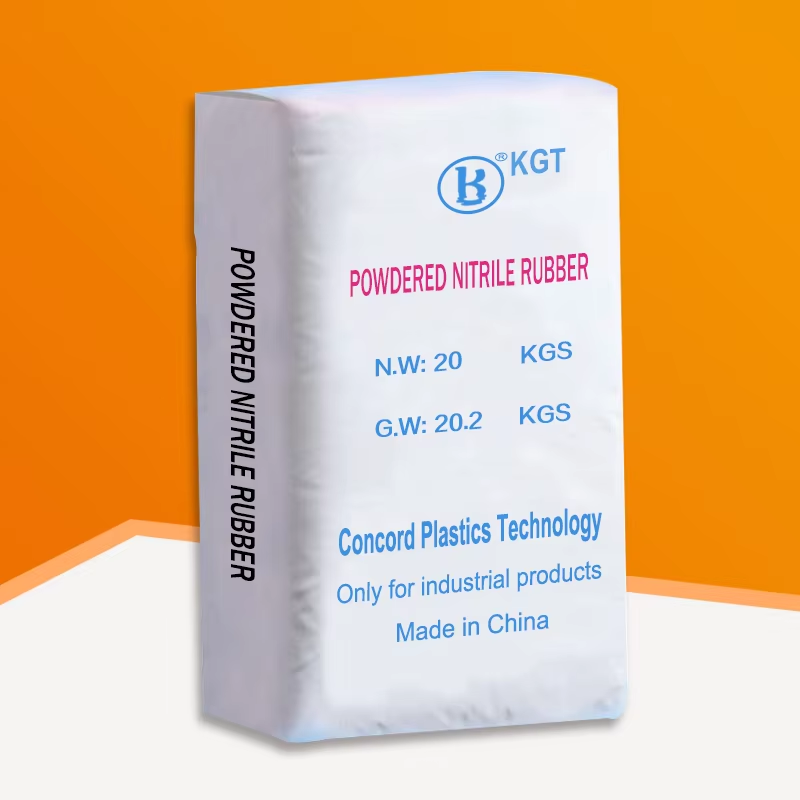
Economic considerations often drive toughening agent dosage decisions, requiring careful balance between performance requirements and material costs. Systematic cost-benefit analysis incorporating both direct material costs and processing implications helps identify economically optimal concentration ranges. Value engineering approaches may reveal opportunities for performance maintenance at reduced loading levels through synergistic additive combinations.
Supply chain reliability and price volatility factors influence long-term formulation strategy decisions. Alternative toughening agent evaluation should consider not only performance equivalency but also dosage efficiency and supply security. Developing multiple approved formulations with different concentration levels provides operational flexibility during supply disruptions or price fluctuations.
FAQ
What factors determine the minimum effective toughening agent dosage?
The minimum effective dosage depends on chemical compatibility between the toughening agent and base polymer, desired performance improvement levels, and processing conditions. Generally, concentrations below 5% by weight may not provide measurable benefits, while exceeding 20% often yields diminishing returns. Optimal ranges typically fall between 8-15% for most polymer systems, but specific applications may require different levels.
How does processing temperature affect toughening agent dosage requirements?
Higher processing temperatures can degrade temperature-sensitive toughening agents, potentially requiring increased initial concentrations to compensate for thermal losses. Conversely, elevated temperatures may improve dispersion efficiency, allowing lower effective dosages. Temperature optimization should balance processing requirements with thermal stability limitations to achieve optimal performance at minimum concentration levels.
Can multiple toughening agents be combined to reduce overall dosage requirements?
Synergistic toughening agent combinations can sometimes achieve equivalent performance at lower total concentrations compared to single-component systems. However, compatibility between different modifiers must be carefully evaluated to prevent adverse interactions. Systematic experimental design helps identify optimal ratios and total concentrations for multi-component toughening systems.
What quality control methods ensure consistent toughening agent dosage in production?
Effective quality control combines gravimetric dosing accuracy verification, real-time rheological monitoring during compounding, and periodic mechanical property testing of finished products. Statistical process control charts track key performance indicators and alert operators to potential dosage deviations. Advanced analytical techniques such as spectroscopic methods can provide rapid concentration verification during production.
Table of Contents
- Fundamental Principles of Toughening Agent Selection
- Processing Considerations and Optimization Strategies
- Advanced Characterization Methods for Dosage Determination
- Industrial Implementation and Quality Control
-
FAQ
- What factors determine the minimum effective toughening agent dosage?
- How does processing temperature affect toughening agent dosage requirements?
- Can multiple toughening agents be combined to reduce overall dosage requirements?
- What quality control methods ensure consistent toughening agent dosage in production?