
 EN
EN

Determining the optimal PVC lubricant dosage is crucial for achieving superior product quality and manufacturing efficiency in polyvinyl chloride processing. The precise balance of lubricants directly impacts melt flow properties, surface finish, thermal stability, and overall processing characteristics. Understanding the complex relationship between lubricant concentration and PVC performance enables manufacturers to optimize their formulations for specific applications while minimizing production costs and maximizing end-product quality.
The selection and dosage of lubricants in PVC compounds represents a delicate balancing act between processing requirements and final product properties. External lubricants facilitate release from metal surfaces and reduce friction between polymer chains and processing equipment, while internal lubricants improve melt flow and reduce viscosity during processing. The synergistic effects of these lubricant systems require careful optimization to achieve desired performance characteristics without compromising mechanical properties or long-term stability.
Understanding Lubricant Types and Functions
External Lubricant Characteristics
External lubricants play a fundamental role in PVC processing by creating a barrier between the polymer melt and metal processing surfaces. These additives typically exhibit limited compatibility with PVC resin, allowing them to migrate to the surface during processing. Common external lubricants include calcium stearate, zinc stearate, and various wax-based compounds that reduce adhesion to processing equipment and facilitate smooth material flow through extruders, injection molding machines, and calendering systems.
The effectiveness of external lubricants depends on their molecular structure, melting point, and compatibility characteristics with the base polymer. Higher molecular weight lubricants generally provide better release properties but may negatively impact surface gloss and clarity. The dosage of external lubricants typically ranges from 0.2 to 1.0 parts per hundred resin (phr), depending on processing conditions, equipment configuration, and desired surface properties.
Internal Lubricant Properties
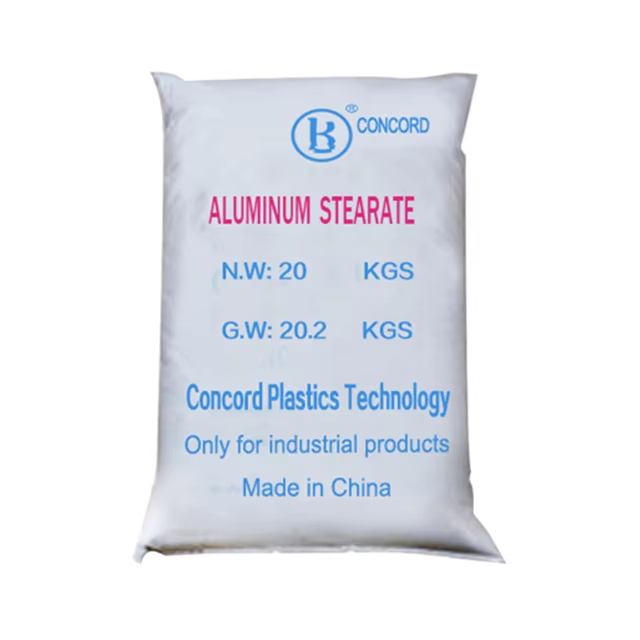
Internal lubricants demonstrate greater compatibility with PVC resin compared to external lubricants, allowing them to remain dispersed within the polymer matrix during processing. These additives reduce intermolecular friction between polymer chains, decreasing melt viscosity and improving flow characteristics. Aluminum stearate, lead stearate, and various ester-based compounds serve as effective internal lubricants, each offering unique performance advantages depending on the specific application requirements.
The selection of internal lubricants significantly influences processing temperature, residence time, and shear sensitivity of PVC compounds. Optimal PVC lubricant dosage for internal systems typically ranges from 0.1 to 0.8 phr, with higher concentrations potentially leading to plate-out issues or reduced fusion characteristics. The synergistic combination of internal and external lubricants often provides superior processing performance compared to single lubricant systems.
Dosage Optimization Principles
Processing Parameter Considerations
The determination of optimal lubricant dosage requires comprehensive evaluation of processing parameters including temperature profiles, screw speed, residence time, and shear rates encountered during manufacturing. Higher processing temperatures generally reduce lubricant effectiveness due to thermal degradation or volatilization, necessitating increased dosage levels or alternative lubricant selections. Conversely, lower processing temperatures may require reduced lubricant concentrations to prevent over-lubrication and associated quality issues.
Equipment design characteristics significantly influence lubricant requirements and optimal dosage levels. High-shear processing conditions typically demand increased external lubricant concentrations to prevent polymer degradation and equipment wear. Processing equipment with specialized barrier screws or mixing elements may require modified lubricant packages to achieve optimal performance. Understanding the relationship between equipment capabilities and lubricant requirements enables precise dosage optimization for specific manufacturing scenarios.
Product Performance Requirements
End-use application requirements play a critical role in determining acceptable lubricant dosage ranges for PVC formulations. Rigid applications such as pipe, profile, and sheet products typically require minimal lubricant levels to maintain mechanical properties and dimensional stability. Flexible PVC applications may tolerate higher lubricant concentrations due to the plasticizer content, which can mask potential negative effects on physical properties.
Surface appearance specifications directly influence lubricant selection and dosage optimization strategies. High-gloss applications require careful balance of external lubricants to prevent surface defects while maintaining adequate release properties. Textured or low-gloss applications may accommodate higher lubricant levels without compromising aesthetic requirements. The interaction between lubricants and other additives such as impact modifiers, stabilizers, and colorants must be considered to prevent incompatibility issues or performance degradation.
Formulation Development Strategies
Systematic Testing Approaches
Effective PVC lubricant dosage optimization requires systematic experimental design incorporating multiple variables and performance criteria. Design of experiments (DOE) methodologies enable efficient evaluation of lubricant concentration effects while minimizing testing time and material consumption. Statistical analysis of processing data and product properties provides valuable insights into optimal dosage ranges and critical control parameters for consistent manufacturing performance.
Laboratory-scale testing protocols should closely simulate production conditions to ensure reliable scale-up results. Rheological measurements using capillary or torque rheometry provide quantitative assessment of lubricant effectiveness across different temperature and shear rate conditions. Processing trials using pilot-scale equipment enable validation of laboratory findings and identification of potential scale-up challenges before full production implementation.
Quality Control Monitoring
Establishing robust quality control procedures for monitoring lubricant dosage ensures consistent product quality and processing performance throughout production runs. Real-time monitoring of processing parameters such as melt temperature, pressure, and torque provides immediate feedback on lubricant effectiveness and potential dosage adjustments. Regular sampling and testing of finished products enables verification of property targets and early detection of formulation drift or contamination issues.
Advanced analytical techniques including thermal analysis, spectroscopic methods, and chromatographic separation provide detailed characterization of lubricant distribution and migration behavior in PVC compounds. These tools enable optimization of lubricant packages for specific performance requirements and development of predictive models for dosage selection. Integration of analytical data with processing information creates comprehensive databases supporting continuous improvement initiatives and new product development activities.
Common Dosage-Related Issues
Over-Lubrication Problems
Excessive lubricant dosage can lead to various processing and product quality issues that compromise manufacturing efficiency and end-product performance. Over-lubrication typically manifests as poor fusion characteristics, resulting in weak weld lines, reduced impact strength, and compromised mechanical properties. Surface defects such as plate-out, streaking, or contamination may occur when lubricant levels exceed optimal ranges, particularly during extended production runs or elevated processing temperatures.
The economic impact of over-lubrication extends beyond immediate quality concerns to include increased material costs, waste generation, and equipment maintenance requirements. Excessive external lubricants may cause downstream processing difficulties in printing, adhesive bonding, or welding operations due to surface contamination. Internal lubricant over-dosage can negatively impact fusion quality, leading to reduced stress crack resistance and long-term durability issues in critical applications.
Under-Lubrication Consequences
Insufficient lubricant dosage creates processing challenges that can severely impact productivity and product quality in PVC manufacturing operations. Under-lubricated compounds typically exhibit increased melt viscosity, elevated processing temperatures, and higher energy consumption during extrusion or molding processes. Equipment wear accelerates under high-friction conditions, leading to increased maintenance costs and potential contamination from metal wear particles.
Product quality suffers when PVC lubricant dosage falls below optimal levels, with common issues including poor surface finish, dimensional instability, and increased reject rates. Thermal degradation becomes more likely under high-friction processing conditions, potentially leading to discoloration, reduced molecular weight, and compromised long-term performance. The cumulative effects of under-lubrication often require significant process adjustments and may necessitate equipment cleaning or maintenance to restore normal operating conditions.
Industry Best Practices
Documentation and Standardization
Successful PVC lubricant dosage optimization requires comprehensive documentation of formulation variables, processing parameters, and quality metrics to enable consistent reproduction of optimal conditions. Standardized testing protocols ensure reliable comparison of different lubricant systems and dosage levels across multiple production facilities or product lines. Well-documented procedures facilitate technology transfer, troubleshooting activities, and regulatory compliance requirements in highly regulated industries.
Implementation of statistical process control (SPC) methodologies enables continuous monitoring of lubricant dosage effectiveness and early identification of trends that may indicate formulation drift or equipment issues. Control charts tracking key performance indicators such as melt temperature, torque values, and surface quality metrics provide objective assessment of process stability and product consistency. Regular review and updating of control limits ensures continued relevance as processing conditions or raw material characteristics evolve.
Supplier Collaboration
Effective collaboration with lubricant suppliers provides access to technical expertise, application support, and innovative solutions for challenging processing requirements. Supplier partnerships enable evaluation of new lubricant technologies, optimization of existing formulations, and development of customized solutions for specific applications. Technical service support from experienced suppliers can significantly reduce development time and improve the probability of successful dosage optimization projects.
Joint development programs with suppliers often yield superior results compared to independent optimization efforts, particularly for complex applications or challenging processing conditions. Supplier-provided analytical services, pilot-scale testing facilities, and application laboratories complement internal capabilities and enable more comprehensive evaluation of lubricant performance. Long-term partnerships with reliable suppliers ensure consistent raw material quality and technical support throughout the product lifecycle.
FAQ
What is the typical dosage range for PVC lubricants?
The typical dosage range for PVC lubricants varies depending on the lubricant type and application requirements. External lubricants generally range from 0.2 to 1.0 parts per hundred resin (phr), while internal lubricants typically range from 0.1 to 0.8 phr. The optimal dosage depends on processing conditions, equipment design, and end-product specifications. Rigid PVC applications usually require lower dosages compared to flexible compounds due to different processing requirements and property targets.
How does processing temperature affect lubricant dosage requirements?
Processing temperature significantly influences lubricant effectiveness and required dosage levels in PVC formulations. Higher temperatures reduce lubricant viscosity and may cause volatilization or thermal degradation, necessitating increased dosage to maintain adequate lubrication. Lower processing temperatures may require reduced lubricant concentrations to prevent over-lubrication effects such as poor fusion or surface defects. Temperature optimization should be conducted in conjunction with lubricant dosage adjustments to achieve optimal processing performance.
Can lubricant dosage affect the mechanical properties of PVC products?
Yes, lubricant dosage can significantly impact the mechanical properties of PVC products through various mechanisms. Over-lubrication may reduce fusion quality, leading to decreased impact strength, tensile properties, and stress crack resistance. Excessive external lubricants can interfere with polymer chain entanglement, while excessive internal lubricants may prevent proper fusion between PVC particles. Conversely, under-lubrication can cause thermal degradation during processing, also compromising mechanical performance.
What factors should be considered when selecting lubricant combinations?
Several factors must be evaluated when selecting lubricant combinations for PVC formulations, including compatibility with other additives, processing requirements, end-use application demands, and regulatory constraints. The synergistic effects between internal and external lubricants require careful balance to optimize both processing performance and product properties. Thermal stability, migration characteristics, and long-term aging behavior should also be considered to ensure consistent performance throughout the product lifecycle.